2025. The year when “just hiring” stopped being enough

This year tested the resilience, flexibility, and adaptability of many HR departments. While managers were planning growth and expansion, the labour market kept putting obstacles in their way.
In 2025, the era of simply posting a job ad and waiting officially ended. The candidate you are looking for either does not exist in reality – or has long been working for your competitor.
Labour market statistics in Czechia and Slovakia are uncompromising
Data from both countries clearly show that in many cases, companies were on the losing side:
- A drained labour market: In the Czech Republic, unemployment remained at an average of 4.3–4.6%. Slovakia, with an average below 6%, saw unemployment reach its historic low in January 2025.
- Wage spiral: A shortage of workers naturally pushed labour costs up. Wages rose by 6–7% in both countries. Slovakia’s average wage reached 1,654 EUR, and Czechia’s climbed to 48,171 CZK.
- Foreign workers as a necessity: The number of foreign workers in the Czech Republic exceeded 820,000. Slovakia also saw an increase in workers from third countries, reaching nearly 140,000 people.
“2025 brought a stable but significantly more demanding market – with a stronger focus on qualification, pay equity, more complex local hiring, and a growing emphasis on international recruitment,” evaluates Dominika Kopčáková, Delivery Director CZ.
Her words are echoed from Slovakia as well: “The Slovak market has long struggled with a lack of qualified employees, especially in IT and technical professions. This issue deepened even further in 2025,” adds Marek Skička, Delivery Director SK.
Legislative changes put companies to the test
In Czechia, the labour code “flexi-amendment” and tighter rules for employing foreigners created pressure for 100% compliance, as the new obligation to report a foreign worker’s start date before beginning work raised the risk of million-crown penalties.
In Slovakia, amendments to the Labour Code came into effect. Companies faced additional mandatory costs. As of January, the minimum wage increased to 816 EUR, and companies with more than 49 employees must contribute up to 275 EUR per year to children’s sports activities—an immediate impact on budgets.
● Positive news from Slovakia: A September amendment finally simplified hiring from third countries, allowing companies to employ foreigners during their Blue Card application process, significantly speeding up Time-to-Hire. Visa requirements were also removed for selected countries and professions.
We became strategic partners for our clients
2025 demonstrated that companies viewing recruitment agencies merely as “CV suppliers” were at a disadvantage.
“Companies realized that effective recruitment is crucial, and they now see recruitment agencies as strategic partners. They seek partnerships that also include responsibility for retention and employee development,” explains Marek.
How did we help clients bring their vision to life?
International recruitment
In Czechia, we successfully recruited qualified welders from the Philippines. In Slovakia, one of the year’s biggest achievements was a large automotive project, where we placed 251 workers from third countries by the end of September. Clients clearly understood that the cost of relocation is ultimately lower than the losses caused by production downtime.
“Clients are increasingly interested in hiring from abroad. They realise that the local labour market is gradually being exhausted, and finding workers with the required skills is becoming more difficult,” adds Dominika.
Taking over administrative burden
Whether it was reporting foreign workers in Czechia the day before their start date or monitoring limits for foreign employees in Slovakia, we took on this burden ourselves. We warned clients in time and set up processes to keep them protected. We became a guarantee of stability in an environment where a single mistake can cost millions.
Reducing turnover
We select employees not only for their know-how but also for their alignment with company culture and pay conditions. We support foreign workers through full adaptation to keep turnover at a minimum.
2026 will bring more changes and challenges. Are you ready?
2026 will bring new challenges and companies must be ready to invest in people, technology, and workplace culture. The future belongs to organizations that understand that employee loyalty cannot be bought with wages alone, but through fairness and trust.
In 2025, we achieved a lot together. And in 2026, we are ready to turn your bravest plans into reality. Do not hesitate to contact us.
Interesting articles

4 Key Changes in the Slovak Labor Code: Are You Ready for Them?
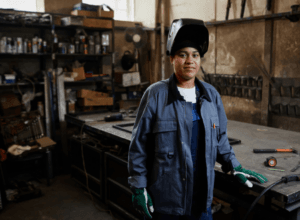
Foreign employees as a strategic source of growth in the Czech labour market

From abroad to the Czech Republic: What employee onboarding looks like in practice

SYNERGIE CONTINUES TO GROW WHILE PRESERVING ITS FINANCIAL ROBUSTNESS
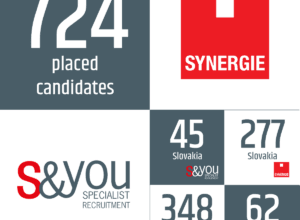
2020: 724 placed candidates in Czecho-Slovakia

Gain a competitive advantage: Effective recruitment strategy for foreign workers

Expert HR breakfast in Ostrava