From 142 candidates to the final 20 welders: how recruitment in the Philippines works in practice
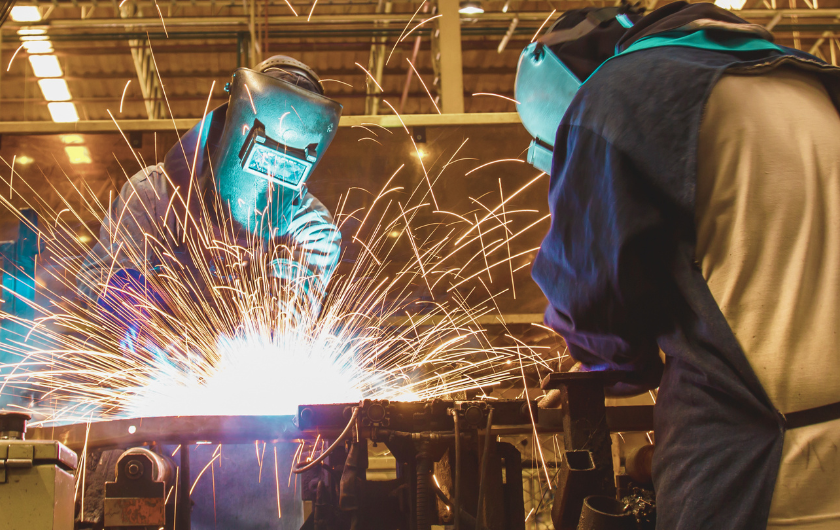
A shortage of qualified welders and other skilled technical positions is a challenge many manufacturing companies face today. Orders are increasing, production is expanding, but finding experienced employees on the local market is becoming increasingly difficult. Recruitment processes often take weeks or even months, and the result is usually just a handful of candidates.
That is why more and more companies are looking beyond the borders of the Czech Republic. One option is recruitment in the Philippines, where there is a strong tradition of technical education and experience from industrial projects around the world.
International recruitment naturally raises questions. The most common one is:
How can a company verify that a worker from the other side of the world is truly capable of performing the job?
The answer is simple. The key is real technical testing before employees arrive in the Czech Republic.
Before recruitment in the Philippines even begins, several administrative steps must be completed.
SYNERGIE ensures company accreditation, communication with the labour office, and registration in the Qualified Employee Program. The process also includes cooperation with a licensed Filipino agency that organizes recruitment directly on-site.
Only then can the actual candidate selection begin.
From 142 candidates to the final 20 welders
Every project like this starts with a broad pool of candidates. In this case, we initially worked with 142 welder profiles.
The first phase included basic candidate screening and a series of interviews that helped narrow down the most suitable employees. A total of 94 online interviews were conducted.
Subsequently, 32 candidates were invited for in-person interviews at a technical testing center in Manila, where the practical part of the selection process takes place.
This phase is crucial for employers.
Testing that reflects real production conditions
Practical testing takes place in a welding workshop equipped the same way as a standard production workplace. Candidates do not go through simulations—they work with real materials, technological procedures, and technical documentation.
The test includes, for example, working with technical drawings. Candidates must be able to correctly interpret drawings, identify individual parts of a structure, and understand where and how a weld should be performed.
We use real production drawings that correspond to documentation used in engineering companies. Candidates therefore work with complete technical documentation from dimensions and weld markings to orientation within the entire product structure.
Only then does the actual practical test follow.
Candidates work according to the WPS welding procedure specification, which precisely defines welding parameters—such as shielding gas type, current, or maximum interpass temperature. This document is based on European technical standards used in engineering.
For companies, this type of testing is important because it reflects real production conditions.
How candidates are evaluated
After completing the test, each candidate undergoes a detailed evaluation. Not only the final weld is assessed, but also the entire work process, the ability to work with technical documentation, and understanding of technological rules.
Each candidate has an individual evaluation report covering all parts of the test from theoretical knowledge and equipment setup to the practical examination.
This makes it possible to objectively compare candidates and select those who best meet the specific company’s requirements.
For employers, this also provides an important level of certainty. The selection is not based solely on past experience, but on actual results from technical testing.
The important role of backup candidates
Our recruitment process also includes a reserve group of candidates. In addition to final hires, we select backup candidates who have passed the same technical testing.
If one of the selected candidates drops out before departure, for example during a medical examination, they can be immediately replaced. In this project, we replaced one selected welder this way, and the recruitment process continued without any delay.
What follows after candidate selection
After selecting candidates, we coordinate the entire administrative process—handling work permits, visas, and required documentation in cooperation with the Filipino agency and Czech authorities. Once employees arrive in the Czech Republic, we also ensure their onboarding and integration into the workplace.
We have described the onboarding process in detail in a separate article: From abroad to the Czech Republic: how employee onboarding works in practice
A stable solution for manufacturing companies
International recruitment is not a universal solution for every company. However, for many manufacturing businesses, it represents a way to stabilize production in a situation where the local labor market is long-term exhausted.
The key factor for success is thorough candidate selection and practical testing before arrival in the Czech Republic.
Thanks to this, companies can gain employees who are able to start work very quickly, often within just a few days after arrival.
Are you interested in how a similar project could work for your company?
Every international recruitment project is tailored to specific production requirements, technology, and workforce size.
If you are facing a shortage of welders, CNC operators, or other technical roles, we will be happy to show you the options currently available to manufacturing companies in the Czech Republic.
Simply get in touch, and we will walk you through how a similar project could work in your operation.
Interesting articles

Companies revealed: These are the 10 reasons why they choose Synergie

Christophe Beaujard – new team member for retail segment
From abroad to the Czech Republic: What employee onboarding looks like in practice
Are you ready for the Christmas season? Part time and temporarily assigned employees will help you

Innovative recruitment abroad addresses shortages in Czech and Slovak industry
2021 Half-Year results show sharp growth

When the boldest plans turn into reality