How do companies attract quality people today? We explored the answers at our HR breakfast in Košice
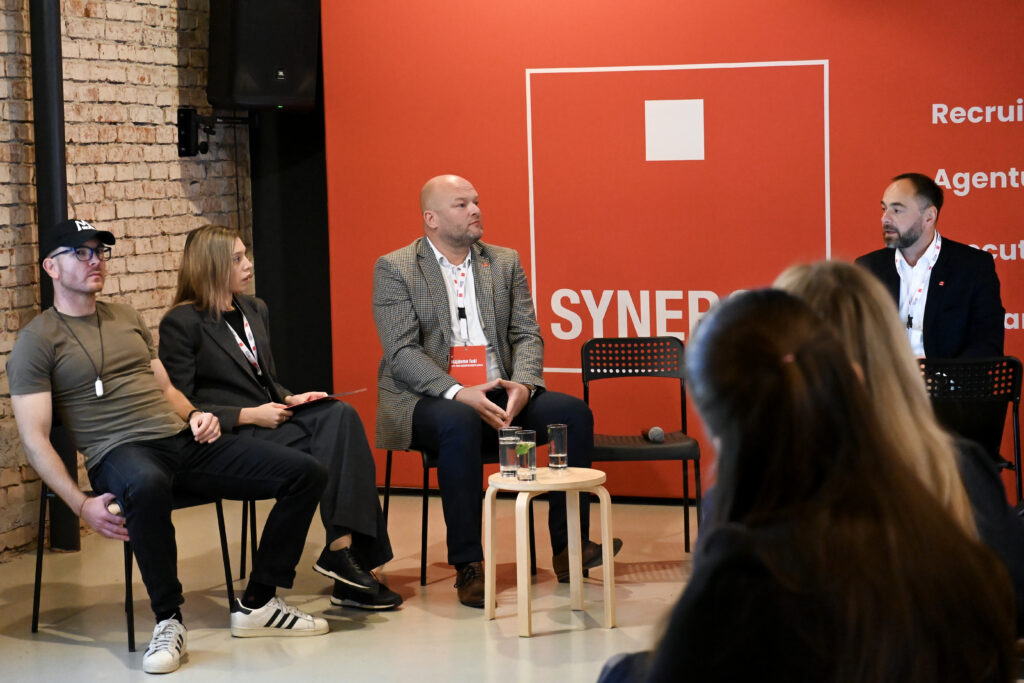
New investment brings opportunities to regions, but it also increases the need for a skilled workforce. Companies need to consider not only where to find people, but also how to approach them and win them over. How are these changes playing out in eastern Slovakia? This was one of the topics we discussed at our HR breakfast with guests Gréta Grohoľová from SARIO and LinkedIn expert Miki Plichta.
Eastern Slovakia has the potential to attract new investment and create job opportunities. For employers, however, the region’s growth also raises questions. Will they have enough people to put their plans into action? How will competition for experienced employees change? And what determines whether a candidate chooses their company today?
We explored these topics during the HR breakfast we organised in Košice. Company representatives, recruitment professionals and guests with different perspectives on the labour market came together around one table.
A common theme throughout the discussion was that successful recruitment begins long before a job vacancy is advertised. It is shaped by the development of the wider region, the employer’s reputation and the ability to respond to candidates’ expectations.
New investment changes both opportunities and competition for employees
When a new investor enters a region or an existing company expands production, we usually see it as positive news. Jobs are created, demand for services grows and opportunities open up for local suppliers.
For employers, however, every major investment also brings another dimension: more companies start looking for people in the same labour market.
This is why the perspective of Gréta Grohoľová from the Slovak Investment and Trade Development Agency (SARIO), whose work focuses on investment projects, was important to the discussion in Košice.
SARIO plays a role in supporting investment and developing the business environment. For companies operating in the region or considering expanding their activities, workforce availability is one of the key considerations.
Investment does more than create new jobs. It also changes conditions for existing employers. They need to anticipate that experienced employees may receive new offers, salary expectations may shift and some positions may become harder to fill.
What does this mean for companies? They should plan their workforce capacity alongside their investment plans, rather than waiting until they need to launch a new facility or production line. Assessing candidate availability, qualifications and salary expectations early helps prevent a situation in which a project is ready to go but lacks the people needed to deliver it.
What does the data tell us about the labour market in eastern Slovakia?
We complemented the discussion about regional development with specific data. Jakub Sedláček, Sales Director CZ&SK at Synergie, presented an overview of the labour market and the differences between regions.
At first glance, higher unemployment might seem to mean a larger pool of available candidates. In practice, however, the number of people out of work does not equal the number of suitable applicants for a particular role. Qualifications, work experience, location, willingness to commute and candidates’ expectations all matter.
The data also shows that pay levels in eastern Slovakia are changing. Between 2022 and 2024, the average wage in the Košice Region rose from €1,415 to €1,661, an increase of approximately 17.4%. In the Prešov Region, it increased from €1,223 to €1,454, or approximately 18.9%.
This sends an important signal to employers. When planning recruitment, they cannot rely solely on the salaries they offered two or three years ago. They need to know which terms are competitive today and how these may change as more employers enter the market.
This is where investment meets the everyday reality of recruitment. Regional development can create new opportunities, but companies can only make the most of them if they also have a workforce strategy in place.
LinkedIn is more than a place to advertise jobs. It shapes how candidates perceive a company
While investment and economic developments influence how many people companies need, their communication can determine whether they capture those people’s interest.
This perspective was brought to the HR breakfast by Miki Plichta, a LinkedIn Storyteller who focuses on professional communication and brand building on LinkedIn.
This topic is becoming increasingly relevant for employers. Candidates do not start forming an opinion about a company only when they attend a job interview. They often already know it through employees’ posts, managers’ communication or the content the company shares. This also applies to people who are not currently actively looking for a new job. Credible communication can therefore support recruitment long before a specific vacancy opens. It shows candidates who works at the company, what they do and which values matter to them.
For companies, this leads to a practical recommendation: LinkedIn does not have to be just another channel for posting job vacancies. It can help build employer awareness and relationships with professionals the company will need in the future. Communication alone, however, is not enough. Candidates need to experience what the company promises externally throughout the selection process and after they join.
How can companies respond to a changing market? A perspective from recruitment practice
Labour market data, new investment and employer branding ultimately come together around one question: How can a company secure the people it actually needs?
Marek Skička, Delivery Director SK, and Matej Cintula, HR Consultant at Synergie, shared their recruitment experience. One of the key insights is that, for many roles, relying exclusively on the local market and traditional job advertising is no longer enough. Companies therefore need to combine several approaches, from proactively contacting candidates and searching for specialists to hiring people from abroad.
One specific example was a collaboration with a construction company in eastern Slovakia that needed skilled workers. As it was not possible to recruit enough suitable candidates domestically, the search was extended to Uzbekistan. The selection process included online interviews and practical assessments of candidates’ skills.
This example shows that a shortage of people in the local market does not automatically mean a company has to put its plans on hold. However, it needs to understand the available alternatives and assess early which option is suitable for the role. Knowing how to win candidates over is equally important.
As highlighted in the session on recruiting specialists, candidates’ decisions are not based solely on salary. Trust, the quality of leadership, development opportunities, company culture and the selection process itself all play a significant role. An overly lengthy process, unclear expectations or poor communication can cause a company to lose a suitable candidate before making a final offer. What matters to employers is therefore not only how many people they can reach, but also how many they can successfully guide through the entire selection process.
The future of recruitment begins before a vacancy opens
The HR breakfast in Košice demonstrated why it is important to look at employment from several angles. Gréta Grohoľová from SARIO brought investment and regional development into the discussion. Miki Plichta explored employers’ visibility and credibility on LinkedIn. Synergie’s experts connected these areas with labour market data and experience from everyday recruitment. Together, these perspectives created a broader picture of the challenges companies face today.
For employers, an important conclusion emerges: if they want to grow, they need to think about people ahead of time. They need to monitor how their region is developing, understand the competition for candidates, build trust in the market and have alternatives ready when traditional recruitment is not enough.
Interesting articles

CEO on the field? How petanque shapes strategies
TURNOVER: MORE THAN €1 BILLION OVER THE HALF-YEAR

peopleTOretail joins SYNERGIE

News in the Czech Labour Code for 2025: Do You Know What Will Change and How to Prepare Effectively?

Retail Expansion Is About the Right People. We helped a well-known fashion brand open 5 stores

The automotive company was expanding production and seeking hundreds of new employees

SYNERGIE: A New Partner for Companies in the Karlovy Vary Region